
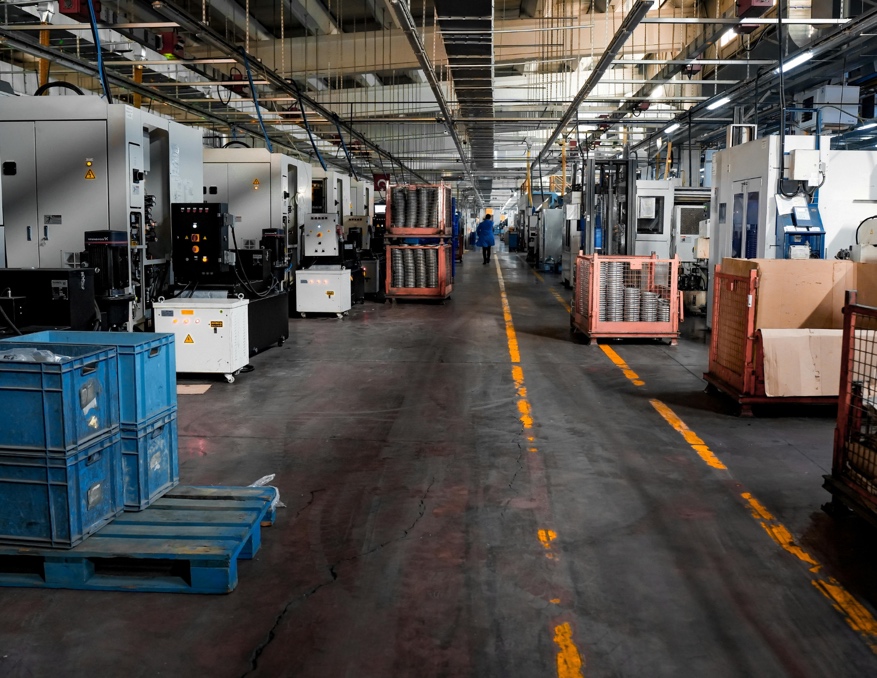
The buyer arrives a few minutes early. Before anyone greets them, they have already formed an impression. They have noticed whether the parking lot is swept and whether the sign out front has faded. In the lobby they glance at the framed certifications on the wall and check the dates. By the time the owner comes out to shake hands, the site visit has been underway for ten minutes.
For most manufacturing sales, the site visit is the moment the business becomes real to a buyer. Up to that point, they have seen financial statements and a marketing document. Now they are walking the floor, and every sense is working. What they see and hear will shape how they feel about the price they have offered and the risks they are taking on.
This article walks through that visit from the buyer’s side, so owners know what an experienced buyer is really looking at.
The first look at the floor
When the door to the production area opens, the buyer takes in the whole room at once. The question in their mind is simple: does this place look like it is run well?
Housekeeping answers much of that question. Clear aisles, marked walkways, tools returned to their places, and floors free of oil and scrap all suggest a disciplined operation. Clutter suggests the opposite, even when the work coming off the line is excellent. Buyers know that a shop which is untidy on the day of a planned visit is rarely tidier on an ordinary Tuesday.
Sound and smell register too. An experienced buyer notices whether machines are running or sitting idle, whether the air is clean, and whether there is a persistent odor of coolant or burned material. None of these is necessarily a problem on its own, but each one prompts a question.
Equipment and capacity
Buyers look closely at the machines. They want to know how old the equipment is and how well it has been maintained. A floor full of older machines in good condition, supported by maintenance records, tells a very different story than one where equipment is held together with makeshift repairs.
Idle equipment raises its own questions. A buyer may see unused capacity as an opportunity to grow without new investment. They may also see it as a sign that demand has fallen. The owner’s explanation matters, and so does whether the numbers in the financial statements support it.
Buyers are also quietly estimating what they will need to spend after closing. A machine near the end of its useful life or a roof that leaks over the paint booth becomes a line item in the buyer’s model. This spending is often called deferred capital expenditure, and buyers will reduce their offer to account for it if they believe it has been put off for too long.
Inventory and work in progress
Stacks of material on the floor tell a buyer a lot. Large amounts of raw material or partially finished product can indicate poor scheduling or stock that may never be used. Buyers will ask how inventory is tracked and whether the counts in the financial statements match what they see. Obsolete or damaged stock that is still carried at full value on the books is a common source of price reductions later in due diligence.
Quality and safety
Buyers pay attention to how quality is controlled. They look for inspection stations, measurement equipment, documented procedures, and evidence of certifications such as ISO standards where they apply. A company that can show its quality data and explain how it handles customer complaints gives the buyer confidence that its customer relationships will hold.
Safety is equally visible. Guards on machines, protective equipment in use, clear signage, and fire extinguishers that have been inspected all signal a responsible operation. A buyer who sees unsafe practices will worry about injuries and insurance costs, and those worries tend to follow them into the negotiation.
Environmental conditions draw scrutiny as well. Stains on the floor near drums, signs of past spills, or a back lot with old equipment and containers can lead a buyer to order an environmental assessment. These findings rarely end a deal, but they can delay it and affect its terms.
The people
Experienced buyers spend as much time watching people as they do looking at machines. They notice whether employees seem engaged and whether supervisors can answer questions without calling the owner over. They notice the age of the workforce and wonder who will replace the most experienced machinists when they retire.
The most telling moment often comes when the buyer asks a technical question. If every head in the room turns toward the owner, the buyer learns that the business depends heavily on one person. If a production manager steps forward and answers confidently, the buyer learns that the company has depth. That difference can affect both the price and how much of it is tied to the owner staying on after the sale.
Preparing for the visit
Owners can do a great deal to make a site visit work in their favor, and most of it is straightforward.
Clean and organize the facility well before buyers arrive, and keep it that way throughout the process. Address small, visible maintenance issues that create a poor impression out of proportion to their cost. Gather maintenance records, safety logs, quality data, and certifications so they are ready when a buyer asks.
Think carefully about who will lead the tour and who will answer questions. Giving your key managers a visible role shows the buyer that the business does not rest entirely on you. Prepare honest explanations for anything a buyer is likely to notice, whether that is idle equipment or an old roof. A clear explanation offered up front is far better than an awkward answer to a question the buyer has been holding back.
Finally, remember that confidentiality still matters. Site visits are usually scheduled carefully, sometimes after hours, so that employees are not alarmed before the owner is ready to tell them. Your advisor can help plan visits that give buyers what they need without putting the business at risk.
Seeing your shop the way a buyer does
Owners walk through their facilities every day, and familiarity makes it hard to see what a stranger sees. It is worth walking your own floor with a buyer’s eyes, or better yet, inviting someone who has been through many sales to walk it with you.
If you own a manufacturing business and are thinking about a sale, Horizon M&A Advisors can help you prepare your facility and your team for the moment a buyer walks through the door.