

Due Diligence Doesn't Kill Deals. Unexpected Surprises Do.
Receiving a Letter of Intent is an important milestone, but it isn't the finish line. During due diligence, buyers look beyond the numbers to validate every aspect of your manufacturing business. Questions that can't be answered or issues that weren't anticipated can slow negotiations, reduce buyer confidence, or change the economics of the transaction.
Download the Checklist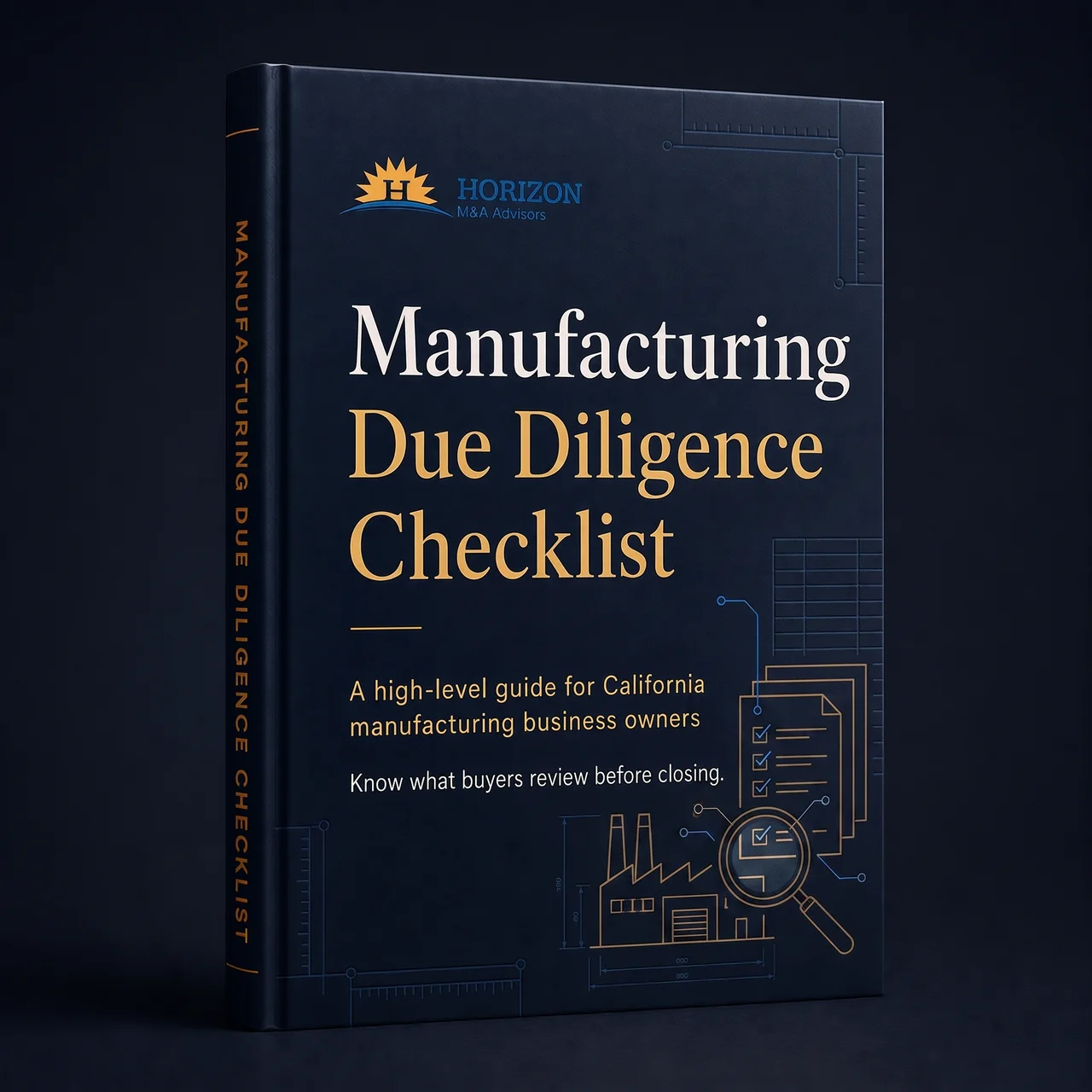
What Is Due Diligence?
Due diligence is the stage where buyers verify the information they've reviewed before making a final commitment to acquire your business.
While financial performance is an important part of the review, sophisticated buyers also evaluate operations, customer relationships, equipment, management, legal matters, supply chain stability, and other factors that could influence future performance.
The objective isn't to find a perfect business. It's to understand risk.
Why Due Diligence Is Different for Manufacturing Businesses
Manufacturing businesses often involve operational complexities that extend well beyond financial reporting. Buyers frequently evaluate how products are made, how production is managed, whether equipment can support future demand, and how dependent the business is on key customers, suppliers, or individuals.
They also seek confidence that operational processes, quality systems, inventory controls, and compliance practices can support continued performance after the ownership transition. Every business is different, but preparation in these areas often contributes to a smoother diligence process.
What Buyers Typically Evaluate
While every transaction is unique, buyers commonly review several broad areas before moving toward closing.
Financial Performance
Can historical performance be clearly understood?
Operations
Are manufacturing processes organized and repeatable?
Customer Relationships
Will important customer relationships remain stable after the transition?
Equipment & Facilities
Can production continue without unexpected capital requirements?
Leadership
Can the business operate successfully after the owner exits?
Risk & Compliance
Are potential operational and regulatory risks understood?
Rather than reviewing every document individually, buyers are looking for confidence that the business is well managed and prepared for transition.
Know What Buyers Will Be Looking For
Our Manufacturing Due Diligence Checklist provides a structured overview of the areas buyers commonly review during manufacturing acquisitions.
Download the ChecklistCommon Misconceptions About Due Diligence
"Due diligence is just a financial audit."
Financial performance is important, but buyers also evaluate operations, customers, management, equipment, legal matters, and future business risks before completing an acquisition.
"If my business is profitable, due diligence will be easy."
Strong financial performance creates interest, but buyers still need confidence that future earnings are sustainable and that potential risks have been understood.
"I'll organize everything after receiving an offer."
Many of the documents and operational information buyers request take time to prepare. Beginning that work only after receiving an offer can create unnecessary pressure and delays.
"Every buyer asks for the same information."
The scope of due diligence often depends on the buyer, transaction structure, industry segment, and perceived risks. While there are common themes, every process is different.
Where Manufacturing Transactions Commonly Slow Down
Not every delay is caused by a major issue. In many manufacturing transactions, delays occur because buyers need additional clarification, documentation, or confidence in specific areas of the business.
Customer Concentration
Inventory Accuracy
Equipment Documentation
Management Dependence
Operational Reporting
Compliance Documentation
Supply Chain Visibility
Identifying these areas before due diligence begins can help reduce unnecessary interruptions during the transaction process.
One of the biggest misconceptions about due diligence is that it's designed to find reasons not to buy a business. In reality, experienced buyers are trying to confirm that the business performs the way it has been presented. Businesses that are organized, transparent, and responsive generally create stronger buyer confidence than businesses that require buyers to repeatedly request additional information.
Are You Ready for Buyer Questions?
If any of these questions create uncertainty, additional preparation may help strengthen buyer confidence before the process begins.
Manufacturing Due Diligence Checklist
A High-Level Guide for California Manufacturing Business Owners, Prepared by Horizon M&A Advisors
Due diligence is often viewed as a document collection exercise. In reality, buyers are trying to answer one question: "Can this business continue performing successfully after the current owner exits?" The more prepared your business is before due diligence begins, the more confidence buyers typically have throughout the transaction.
Financial Readiness
Operations
Customers
Suppliers
Equipment & Facilities
Inventory
Leadership
Legal & Compliance
Technology
Transaction Readiness
Completing a checklist does not mean your business is due diligence ready. Every manufacturing business has unique operational, financial, and strategic considerations. Buyers evaluate these factors differently depending on the transaction, industry niche, and acquisition objectives. The purpose of this checklist is to help you understand the broad areas that often influence buyer confidence before the due diligence process begins.