

Preparing for Due Diligence Starts Long Before You Receive an Offer
Receiving an offer is an exciting milestone, but it's only the beginning of the buyer's evaluation process. During due diligence, buyers verify the financial, operational, and commercial information they've been provided, reviewing customer relationships, supplier agreements, inventory management, warehouse operations, and logistics capabilities to understand how the business is likely to perform after the ownership transition.
Download the Checklist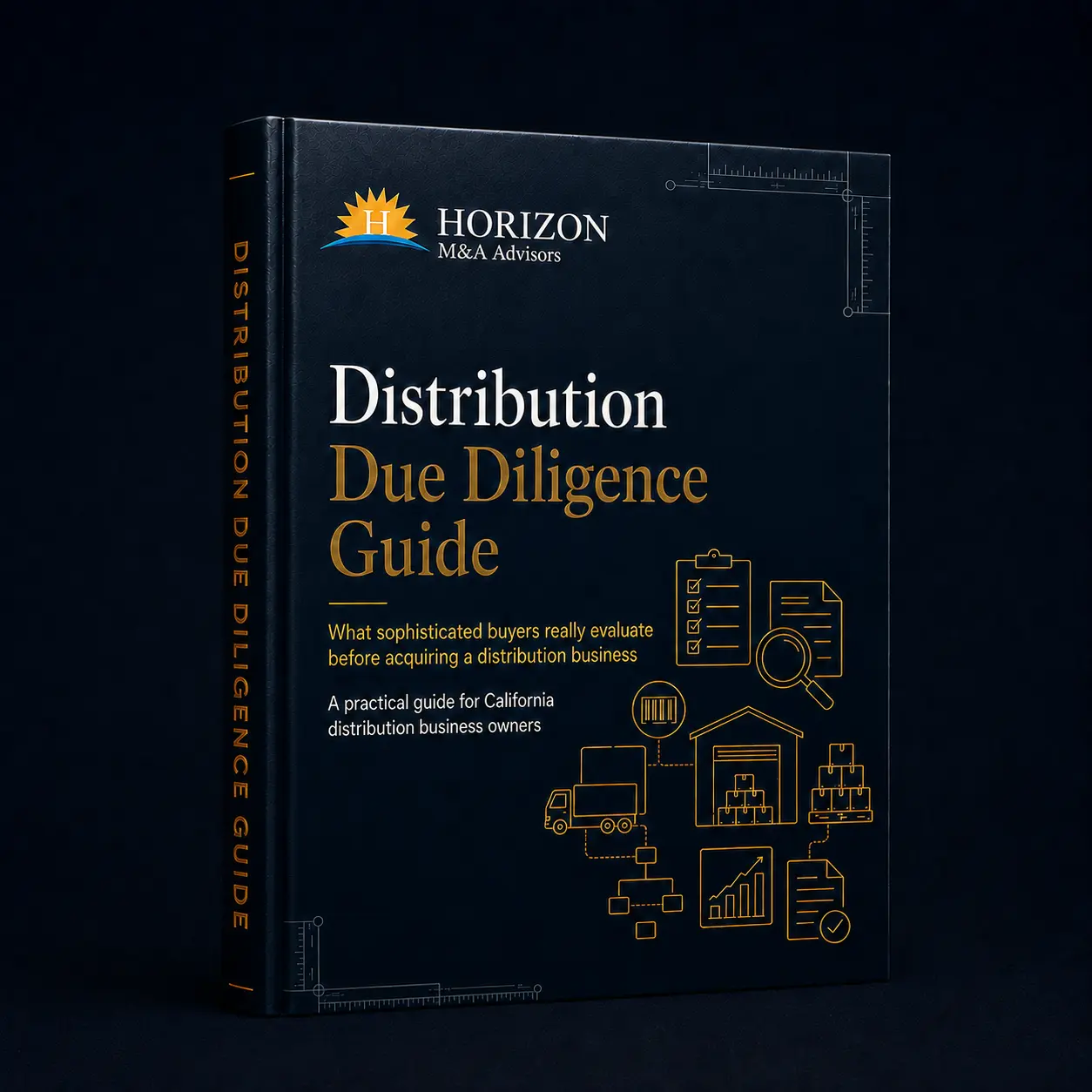
What Is Due Diligence?
Due diligence is the process buyers use to validate the information presented before completing an acquisition.
While financial reporting is an important part of the review, buyers also evaluate operational performance, customer relationships, supplier stability, inventory accuracy, technology systems, and the overall ability of the business to continue performing after the ownership transition.
The objective isn't to find a perfect business. It's to understand the opportunities and risks associated with the acquisition.
Why Due Diligence Is Different for Distribution Businesses
Distribution businesses have unique operating characteristics that buyers evaluate carefully. Revenue often depends on long-term customer relationships, reliable supplier partnerships, inventory accuracy, warehouse efficiency, and consistent logistics performance.
Because inventory and working capital frequently represent significant portions of business value, buyers typically spend considerable time validating these areas during due diligence. Technology systems, operational reporting, and management capabilities also play an important role in helping buyers understand how the business functions after the ownership transition.
What Buyers Commonly Evaluate
Although every transaction is different, buyers generally review several key areas before moving toward closing.
Financial Performance
Can the company's historical financial performance be clearly understood?
Customer Relationships
Are customer relationships stable, diversified, and sustainable after the owner's exit?
Supplier Network
How dependent is the business on key suppliers?
Inventory Management
Are inventory controls accurate, consistent, and supported by reliable reporting?
Warehouse & Logistics
Can warehouse operations and distribution processes continue efficiently after the transition?
Technology & Systems
Do ERP, WMS, CRM, and reporting systems provide reliable operational visibility?
Leadership
Can the business continue operating successfully without heavy owner involvement?
Rather than reviewing every document individually, buyers are looking for confidence that the business is well managed and prepared for a smooth transition.
Preparation Builds Buyer Confidence
The more organized your business is before due diligence begins, the easier it becomes to respond confidently to buyer requests.
Download the Distribution Due Diligence ChecklistCommon Misconceptions About Due Diligence
"Due diligence is only about financial statements."
Financial performance is only one part of the review. Buyers also evaluate operations, inventory, customer relationships, supplier agreements, technology systems, and management capabilities.
"If our sales are growing, due diligence will be straightforward."
Revenue growth creates buyer interest, but buyers still need confidence that future earnings are sustainable and operational risks are understood.
"We'll organize everything after accepting an offer."
Many of the documents and operational records buyers request take time to prepare. Waiting until negotiations begin often creates unnecessary delays.
"Every buyer requests the same information."
No two transactions are identical. The scope of due diligence varies depending on the buyer, industry focus, transaction structure, and perceived business risks.
Where Distribution Transactions Commonly Slow Down
Many transactions aren't delayed because of major problems. They're delayed because buyers require additional information or greater confidence in specific areas.
Customer Concentration
Supplier Dependency
Inventory Accuracy
Working Capital
Warehouse Operations
Technology Systems
Management Succession
Logistics Performance
Addressing these areas before entering due diligence often helps maintain transaction momentum.
One of the biggest misconceptions about due diligence is that buyers are looking for reasons to walk away. In reality, buyers are looking for confidence. Distribution businesses that demonstrate organized operations, reliable reporting, diversified customer relationships, and consistent inventory management often move through due diligence more efficiently than businesses where important information is difficult to verify.
Reduce Surprises Before Due Diligence Begins
Our checklist helps distribution business owners understand the major review categories buyers commonly evaluate during acquisitions.
Download the ChecklistAre You Ready for Buyer Questions?
If several of these questions create uncertainty, additional preparation may strengthen buyer confidence before entering the market.
Distribution Due Diligence Checklist
A High-Level Guide for California Distribution Business Owners, Prepared by Horizon M&A Advisors
Our Distribution Due Diligence Checklist provides a structured overview of the areas buyers commonly review during distribution acquisitions, including financial information, customer relationships, supplier agreements, inventory management, warehouse and logistics operations, working capital readiness, technology and business systems, leadership, and operational documentation.
Financial Information
Customer Relationship Review
Supplier Agreements
Inventory Management
Warehouse & Logistics Operations
Working Capital Readiness
Technology & Business Systems
Leadership & Management
Operational Documentation
This checklist is designed to help you understand the major review categories buyers commonly evaluate during distribution acquisitions. It is not intended to replace professional M&A advice. Every transaction is unique, and buyers evaluate these factors differently depending on the industry, transaction structure, and business characteristics. If you're planning to sell your distribution business, a confidential conversation with an experienced M&A advisor can help you better understand your due diligence readiness.