

The Sale Price Isn't the Amount You Keep.
What every California contractor business owner should understand before accepting an offer. While valuation is important, the purchase price tells only part of the story — transaction structure, taxes, working capital, payment terms, and post-closing obligations all shape what you actually take home.
Download the Guide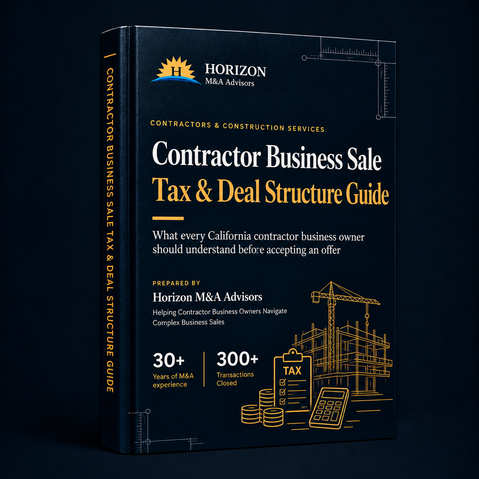
The Sale Price Isn't the Amount You Keep
When contractor business owners begin planning an exit, one question usually comes first: what is my business worth? While valuation is important, the purchase price tells only part of the story. The amount you ultimately receive can also be influenced by the transaction structure, taxes, working capital, payment terms, and obligations that continue after closing.
Imagine receiving two offers for your contracting business. Both buyers value the company at $18 million. The first buyer offers the full $18M in cash at closing. The second buyer offers the same purchase price, but includes an earnout tied to future project performance and requires transition support after closing. Although the headline value is identical, the financial outcome and level of certainty may be very different.
The strongest transaction isn't always the one with the highest purchase price. It's the one that best balances value, certainty, tax efficiency, and long-term objectives.
Understand How Value Is Delivered, Not Just the Headline Number
A purchase price starts the conversation. Understanding how that value is delivered is what helps owners make informed decisions.
Download the GuideSix Factors That Shape Your Final Proceeds
Every contractor business transaction is structured differently. Rather than focusing only on the purchase price, experienced sellers evaluate how the entire transaction is organized before making a decision.
Transaction Structure
The way ownership is transferred can influence taxes, legal responsibilities, and transaction complexity.
Tax Considerations
The structure of a transaction may affect the amount ultimately retained after closing.
Working Capital
Contractor transactions may involve discussions around accounts receivable, retainage, accounts payable, and other operating requirements.
Payment Terms
Cash at closing, deferred payments, earnouts, and seller financing affect when and how proceeds are received.
Legal Commitments
Purchase agreements define responsibilities, allocate risk, and establish obligations before and after closing.
Transition Support
Buyers may request assistance with customers, employees, projects, and operational knowledge after closing.
Industry Insight: Contractor buyers often place significant emphasis on project contracts, backlog, WIP, customer concentration, licensing, bonding, and management continuity because these factors can directly influence future business performance.
Asset Sale vs. Stock Sale: Why the Structure Matters
One of the first discussions in a contractor business sale is how the transaction will be structured. Neither approach is universally better — the appropriate structure depends on the objectives of both the buyer and the seller, and the nature of the contracting business.
Asset Sale
Stock Sale
Why it matters: tax treatment, transfer of liabilities, existing contracts and permits, transaction complexity, and future operational flexibility. Contracting businesses can have important customer contracts, licenses, bonding arrangements, project obligations, equipment, and employee relationships — understanding how these items transfer or remain with the legal entity can be an important part of the negotiation process.
Understanding Working Capital
One of the most common surprises during a contractor business sale is working capital. Many owners assume the agreed purchase price is exactly what they will receive at closing. In practice, buyers typically expect the business to be transferred with enough operating resources to continue managing projects and serving customers normally after the ownership transition.
For a contracting business, working capital commonly includes:
Did you know? Working capital adjustments are not designed to reduce the purchase price. Their purpose is to ensure the business has sufficient resources to continue operating normally after ownership changes.
Looking Beyond Cash at Closing
Many contractor business sales include a combination of payment methods — cash at closing, deferred payments, earnouts, seller financing, and escrow or holdbacks — each offering a different balance of certainty, timing, and risk.
Download the GuideUnderstanding Your Responsibilities After Closing
For many business owners, closing the transaction feels like the finish line. In reality, many contractor business sales include commitments that continue after ownership changes.
1. Transition Support
Buyers may request the seller's assistance for a defined period after closing, including introducing key customers, supporting project managers, or transferring operational knowledge.
2. Non-Compete Agreements
Purchase agreements may include provisions restricting the seller from operating or joining a competing business for an agreed period and geographic area.
3. Representations & Warranties
Sellers are typically asked to confirm that important information about the business, including financial records, contracts, project information, and legal compliance, has been accurately disclosed.
4. Indemnification
Purchase agreements often establish how certain claims or liabilities will be handled if issues arise after closing.
Common Deal Structure Mistakes Contractor Owners Should Avoid
Focusing Only on Purchase Price
A higher headline price may include earnouts, deferred payments, or additional obligations that change the overall outcome.
Overlooking Working Capital
Failing to understand how accounts receivable, retainage, accounts payable, and other operating balances will be treated can create unexpected adjustments at closing.
Ignoring Project & Contract Obligations
Active projects, customer contracts, warranties, bonding requirements, and potential claims can affect how risks are allocated between buyer and seller.
Underestimating Post-Closing Responsibilities
Transition support, representations and warranties, indemnification, and non-compete provisions may create obligations after the transaction closes.
Questions to Consider Before Accepting an Offer
Receiving an offer is a significant milestone, but it is also the beginning of some of the most important decisions in the transaction.
Well-informed decisions are rarely made under pressure. Taking time to evaluate the complete transaction helps contractor business owners enter negotiations with greater confidence.
Contractor Business Sale Tax & Deal Structure Guide
What Every California Contractor Business Owner Should Understand Before Accepting an Offer, Prepared by Horizon M&A Advisors
This guide covers the transaction structure decisions, tax considerations, and post-closing obligations that shape what you actually take home from a sale.
Transaction Structure
Working Capital
Payment Terms
Legal Commitments
Post-Closing Responsibilities
Advisory Team
This guide provides a high-level overview of common considerations in contractor business sales. It is intended for educational purposes only and should not be interpreted as legal, tax, accounting, or financial advice. Every contractor business is unique, and business owners should seek guidance from qualified professionals based on their individual circumstances.