
You spent years building something valuable. Now you are thinking about selling it — and someone just told you that most business owners leave 20 to 40 percent of their value on the table. That is not an exaggeration.
Pre-sale business preparation is what separates owners who sell at full value from owners who scramble, discount, and regret. The difference is almost never the business itself. It is the timing and structure of the preparation. This checklist gives you a clear, month-by-month roadmap for the 12 months before you bring your business to market.

Key Takeaways
- Businesses that achieve full sale value start structured preparation 12 to 24 months before listing — not after finding a buyer.
- Clean, auditable financials are the highest-leverage action before a sale. Poor financial records are among the top three mistakes sellers make.
- A business that runs without its owner commands a significantly higher multiple than one dependent on the founder’s daily involvement.
- The average time to sell a small business runs seven to ten months from advisor engagement to close, per the IBBA and M&A Source Market Pulse Survey. Add the preparation period and the realistic timeline from decision to cash is 18 to 30 months.
- Businesses with an enterprise value of $5M–$50M received an average valuation of 6.0x EBITDA in Q4 2024, according to the IBBA and M&A Source Market Pulse Survey. Preparation directly determines where your business lands in that range.
Why 12 Months Is the Minimum, Not the Target
What is pre-sale business preparation?
Pre-sale business preparation is the structured process of improving a company’s financial records, operations, legal standing, and market positioning before it is brought to market for acquisition. The goal is to increase valuation, reduce buyer-perceived risk, and accelerate the due diligence process so that deals close at full value.
According to the IBBA and M&A Source Market Pulse Survey, the average time to sell a small business runs seven to ten months from advisor engagement to close. That is the transaction window alone. It excludes everything that needs to happen before you speak to a single buyer.
The businesses that sell at or above asking price are not always the most profitable. They are the most prepared. Buyers price certainty. Anything that introduces doubt — messy books, owner-dependent revenue, unresolved legal exposure — gets discounted hard or kills the deal entirely.
Twelve months is enough time to fix most problems. Waiting six months is not.
Understand your business’s current value before you start
Months 12 to 9: Build the Financial Foundation
What financial records do buyers require?
Buyers will want a minimum of three years of monthly profit and loss statements, balance sheets, and cash flow reports that reconcile precisely with tax filings and bank statements. Anything that cannot be quickly substantiated by a buyer’s accountant becomes a risk flag. Risk flags lower your multiple.
Start here because financial cleanup takes longer than almost every business owner expects. Reclassifying personal expenses buried in operating costs — a near-universal practice in owner-operated businesses — requires careful documentation. Done sloppily, it looks like manipulation. Done properly, it increases your normalized EBITDA and therefore your valuation.
According to the IBBA Market Pulse Survey, poor financial records rank among the top three mistakes sellers make that hurt their chance of completing a deal. The survey, which covers hundreds of business brokers and M&A advisors each quarter, consistently identifies financial disorganization as a leading cause of failed or discounted transactions.
Actions for Months 12 to 9:
- Engage a CPA with M&A transaction experience — not just your regular tax accountant
- Separate personal expenses from business operating costs with documented justification
- Restate trailing 12-month and three-year EBITDA on a normalized basis
- Ensure monthly financials reconcile precisely with filed tax returns
- Request a Quality of Earnings assessment if your expected transaction value exceeds $2 million
Should I get a business valuation before I list?
Yes — and earlier than you think. A professional valuation at month 12 does two things. It separates your personal attachment to a number from what the market will actually support. And it tells you exactly which gaps to close over the next year to move your valuation from average to above-market.
Horizon MAA provides pre-sale valuations specifically designed to guide your preparation, not just confirm a number.
Want to Know your Valuation before preparing your business for sale
Book a Confidential Consultation️
Months 9 to 6: Build Operational Independence
Why does owner dependency hurt a business sale?
A business that depends on its owner to retain customers, manage key relationships, or make daily decisions is not a transferable asset. It is a job with revenue. Buyers — especially financial buyers such as private equity firms — pay multiples for systems and teams, not for access to the founder’s personal relationships.
According to the BizBuySell Q4 2024 Insight Report, which tracked 9,546 closed small business transactions representing $7.59 billion in enterprise value, buyer competition intensified specifically for well-prepared, cash-flowing businesses. Businesses without clear operational independence faced longer timelines and softer pricing. The report noted directly that “strong, cash-flowing businesses are in high demand” while “businesses with flat or declining performance tend to face more scrutiny and longer timelines.”
If your top clients call you personally, if your team cannot make decisions without you, or if revenue would visibly dip in the first 90 days after a sale, your multiple is already suppressed. The fix requires deliberate delegation and documented process — and it cannot be rushed.
Actions for Months 9 to 6:
- Document all repeatable processes using written standard operating procedures
- Transition key client relationships to a senior employee or account manager
- Promote or hire a general manager capable of running daily operations independently
- Map your revenue sources and flag any single customer representing more than 15% of total revenue — then build a concentration reduction plan
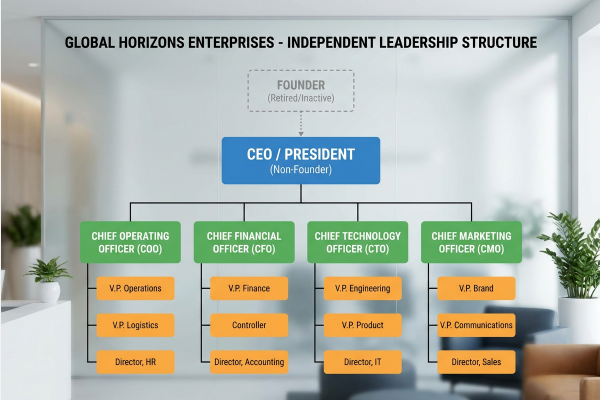
- Create an organizational chart that shows a buyer how the business operates without you in it
Working on your exit? Horizon MAA works with business owners starting at month 12 to identify which operational gaps are costing the most at the negotiating table. The earlier the diagnosis, the more time you have to fix it. [INTERNAL LINK: horizonmaa.com/advisory-consultation]
Months 6 to 3: Legal and Documentation Clean-Up
What legal issues do buyers uncover during due diligence?
Due diligence for a standard small business sale typically runs three to four months after a letter of intent is signed, according to the IBBA Market Pulse Survey Q4 2023. During that phase, buyers and their advisors review every legal, contractual, and compliance element of the business. Anything unresolved at that stage can delay closing, reduce your price through a re-trade, or kill the deal entirely.
Buyers are not looking for perfection. They are looking for transparency and organization. A seller who hands over a clean, indexed data room signals competence and reduces perceived risk. A seller scrambling to locate a five-year-old supplier agreement signals the opposite.
Actions for Months 6 to 3:
- Review all customer, supplier, lease, and employment contracts for assignment clauses — confirm these agreements can transfer to a new owner without renegotiation or third-party consent
- Confirm that all intellectual property — trademarks, domain names, software, and proprietary processes — is registered in the business entity’s name, not your personal name
- Resolve any outstanding litigation, tax disputes, or regulatory compliance issues before the business goes to market
- Verify that all business licenses and operating permits are current, valid, and transferable
- Build and organize a digital data room containing financial records, legal agreements, tax returns, employee documentation, and insurance policies
Do I need an M&A attorney?
For any transaction above $500,000, yes. An M&A attorney is not interchangeable with a general commercial lawyer. You need someone who has reviewed hundreds of purchase agreements and knows exactly where unfavorable terms are buried in standard buyer drafts.
Months 3 to 1: Positioning and Buyer Readiness
How do I present my business to attract the right buyers?
The final three months before listing are about packaging and positioning — not fixing problems. If structural issues remain at month three, the preparation timeline has already slipped and you will feel the consequences in your final price.
According to the IBBA and M&A Source Market Pulse Q4 2024 Survey, businesses with an enterprise value between $5M and $50M received an average valuation of 6.0x EBITDA, matching the peak levels seen in Q4 2021. At the Main Street level, the BizBuySell Q4 2024 Insight Report showed the median sale price for closed transactions reached $345,000 — a 3% year-over-year increase — with the average cash flow multiple rising from 2.49 to 2.57. Knowing your realistic range before negotiations start prevents you from being anchored by the first offer you receive.
Actions for Months 3 to 1:
- Develop a Confidential Information Memorandum (CIM) — the core document provided to qualified, NDA-signed buyers, covering your business model, financial history, growth narrative, customer base, operations, and future opportunity
- Define your ideal buyer profile: strategic acquirer, private equity firm, management buyout, or individual operator — each type evaluates your business differently and requires a different approach
- Work with your M&A advisor to set a defensible price range based on comparable closed transactions, not just your own valuation number
- Prepare a management presentation — a 30 to 45-minute overview designed to build buyer confidence during early-stage conversations
- Brief your leadership team on handling buyer meetings professionally without revealing sensitive information prematurely
The One Thing Most Pre-Sale Checklists Miss
Every checklist covers financials, legal, and operations. Almost none addresses personal readiness directly — and it is the most common reason deals collapse in the late stages.
According to the IBBA Market Pulse Survey, the single most common reason client companies fail to sell is unrealistic valuation expectations, cited by 33% of surveyed brokers and intermediaries. Burnout, declining sales, and poor financial records followed. These are not market problems. They are seller preparation problems.
Business owners who are not personally ready for exit frequently self-sabotage deals. They stall on paperwork. They become hypercritical of every buyer. They inflate their price expectations precisely when a solid, qualified offer arrives.
Before you begin month 12 of this checklist, answer these questions honestly:
- What is your minimum acceptable net proceeds after tax?
- What do you intend to do after the sale?
- Are you prepared to sign a non-compete agreement for two to three years?
- Are you willing to stay on for a transition period of six to twelve months?
These are not soft questions. They are deal-structuring decisions that must be settled before you sit across from a buyer. Every one of them affects price, structure, and who the right buyer actually is.
FAQ: Pre-Sale Business Preparation
How far in advance should I prepare my business for sale?
The IBBA and M&A Source Market Pulse Survey recommends beginning structured preparation at least 12 months before your target listing date. For businesses with deeper structural issues — customer concentration, weak management depth, or inconsistent margins — two years of preparation is more realistic. The average transaction from advisor engagement to close runs seven to ten months. Combined with a 12-month preparation period, the realistic timeline from decision to cash in hand is 18 to 30 months for most privately held businesses.
What is the most important step in preparing a business for sale?
Organizing clean, auditable, and normalized financial records is the single highest-impact preparation step. Buyers and their lenders need to trust your numbers before they commit capital. According to the IBBA Market Pulse Survey, poor financial records are consistently ranked among the top mistakes that prevent deals from closing. Engage a CPA with M&A experience at least 12 months before listing to normalize your earnings and verify that your statements reconcile with tax returns.
How long does it take to sell a business?
According to the IBBA , the average time from advisor engagement to close for a small business runs seven to ten months. That covers the transaction process only. The preparation period adds another 12 months minimum. Business owners who compress this timeline under pressure from burnout or urgency typically accept worse terms and lower prices as a result.
What factors reduce business valuation the most before a sale?
The five highest-impact value killers are: owner-dependent revenue, single-customer concentration above 15% of total revenue, inconsistent or declining margins, unresolved legal or compliance exposure, and disorganized financial records. Each of these is correctable with sufficient lead time. None can be fixed in the 30 days before listing without raising serious red flags with buyers.
Do I need a business broker or M&A advisor?
For businesses generating above $1 million in annual revenue, working with a professional M&A advisor consistently produces stronger outcomes than attempting a direct sale independently. According to the BizBuySell Q4 2024 Insight Report, 91% of brokers cite seller financing as critical in today’s market and deal structures are becoming more complex. Professional advisors provide buyer access, qualification, negotiation support, and process management. The advisory fee is almost always recovered through better deal terms, faster execution, and fewer collapsed transactions.
What is a Confidential Information Memorandum and do I need one?
A Confidential Information Memorandum (CIM) is a structured document provided to qualified buyers after they sign a non-disclosure agreement. It covers your business model, financial performance history, customer base, operations, management team, and growth opportunity. For any professionally run sale process, a CIM is not optional. A well-prepared CIM reduces buyer questions during early diligence, builds confidence, and supports competitive bidding. A poorly prepared CIM signals an amateur process.
Final Pre-Sale Preparation Checklist Summary
Months 12 to 9: Financial Foundation
- Engage a CPA with M&A transaction experience
- Normalize three years of EBITDA and remove personal expense items
- Ensure financials reconcile with tax returns and bank records
- Commission a professional business valuation
- Consider a Quality of Earnings assessment for transactions above $2 million
Months 9 to 6: Operational Independence
- Document all standard operating procedures and repeatable processes
- Transition client relationships away from the owner
- Hire or promote a capable general manager
- Reduce single-customer revenue concentration below 15%
- Build a clear organizational chart buyers can read and trust
Months 6 to 3: Legal and Documentation
- Review all contracts for assignment clauses
- Confirm all intellectual property is owned by the business entity
- Resolve outstanding litigation, tax disputes, and compliance issues
- Build and organize a digital data room
- Confirm all licenses and permits are current and transferable
Months 3 to 1: Positioning and Buyer Readiness
- Prepare the Confidential Information Memorandum
- Define your ideal buyer profile
- Set a defensible price range with your M&A advisor
- Prepare a management presentation
- Align personal readiness and post-sale objectives before going to market
Conclusion: Start Now or Negotiate From Weakness
Selling a business is one of the most consequential financial events of your life. The difference between full value and a discounted exit is almost never the market — it is how prepared you were when the right buyer showed up.
Most owners wait until they are burned out, facing a health event, or responding to an unsolicited offer before thinking seriously about selling. By then, they have already lost leverage over price, structure, and timing. The owners who achieve the strongest outcomes treat the sale process as a deliberate strategic project with a clear 12-month runway — not a reactive transaction.
Horizon MAA works exclusively with business owners preparing for exit. We help you identify the gaps suppressing your valuation, build the documentation buyers require, and position your business to attract qualified buyers at the right price. If you are considering a sale in the next one to three years, now is exactly the right time to have that conversation.