
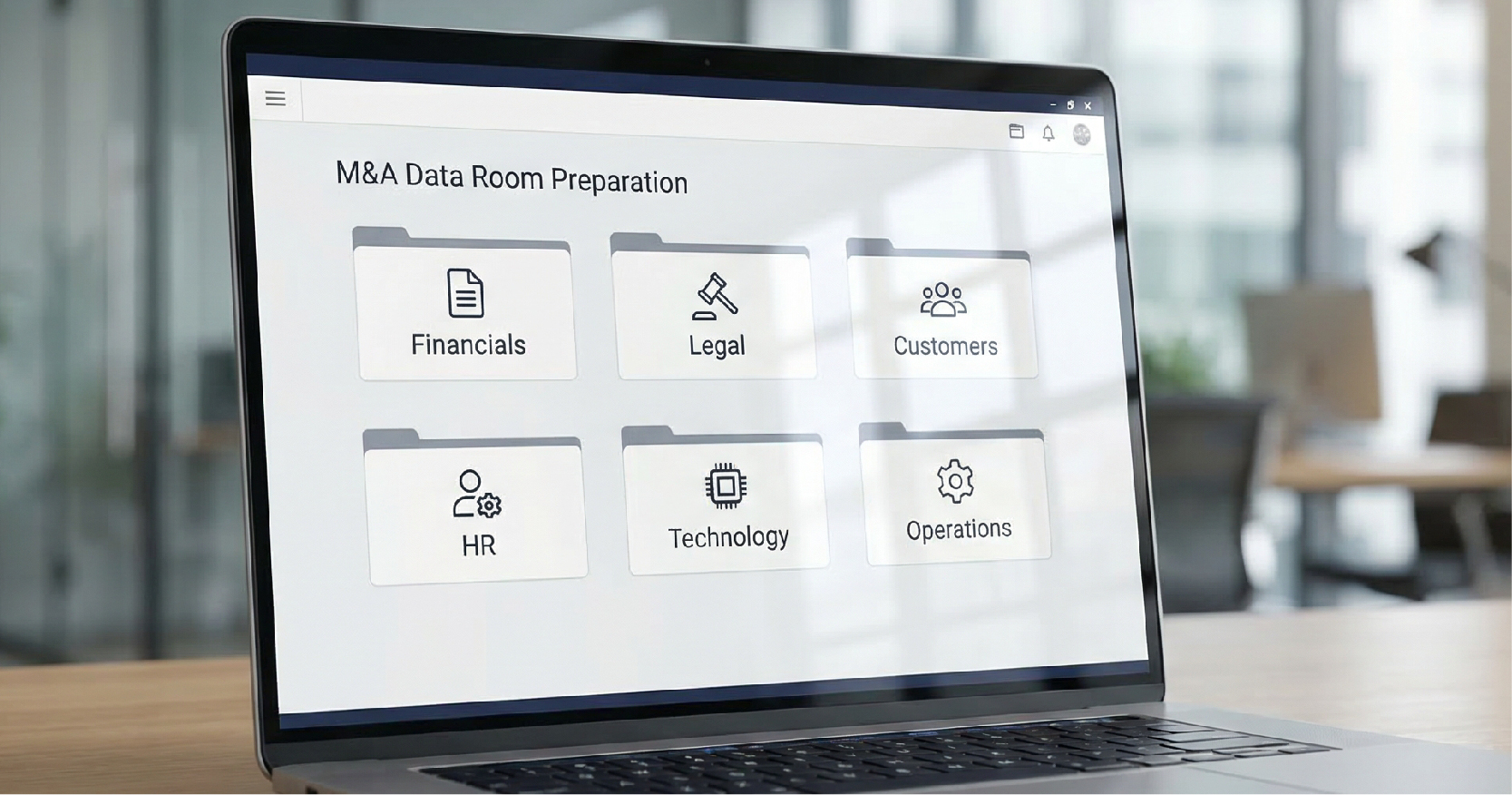
A well-organized data room accelerates due diligence, builds buyer confidence, and reduces the risk of valuation discounts during a business sale. Buyers rely on data rooms to verify financial performance, operational stability, legal compliance, and growth assumptions. When documents are incomplete or disorganized, diligence slows, trust erodes, and buyers often push for price reductions or stricter deal terms. Business owners who are selling your business and build a structured data room before going to market improve transaction efficiency, maintain negotiating leverage, and increase the likelihood of closing at the expected valuation.
Why the Data Room Matters in M&A
For many sellers, due diligence is the most demanding phase of the transaction process.
Once a Letter of Intent is signed, how buyers evaluate acquisitions becomes very clear – they begin examining every aspect of the business. Their goal is to confirm that the company performs as presented and that no hidden risks exist.
This process typically happens through a virtual data room (VDR) – a secure repository where sellers share key financial, legal, operational, and strategic documents.
When a data room is organized and comprehensive, diligence moves efficiently.
When information is scattered or incomplete, several problems arise:
- Buyers lose confidence in financial reporting
- Diligence timelines expand
- New questions emerge late in the process
- Negotiation leverage shifts toward the buyer
In many transactions, poorly prepared data rooms contribute directly to retrades, extended exclusivity periods, and delayed closings.
For business owners planning an exit, preparing a strong data room is not just administrative work – it is a value-protection strategy.
What Buyers Expect to See in a Data Room
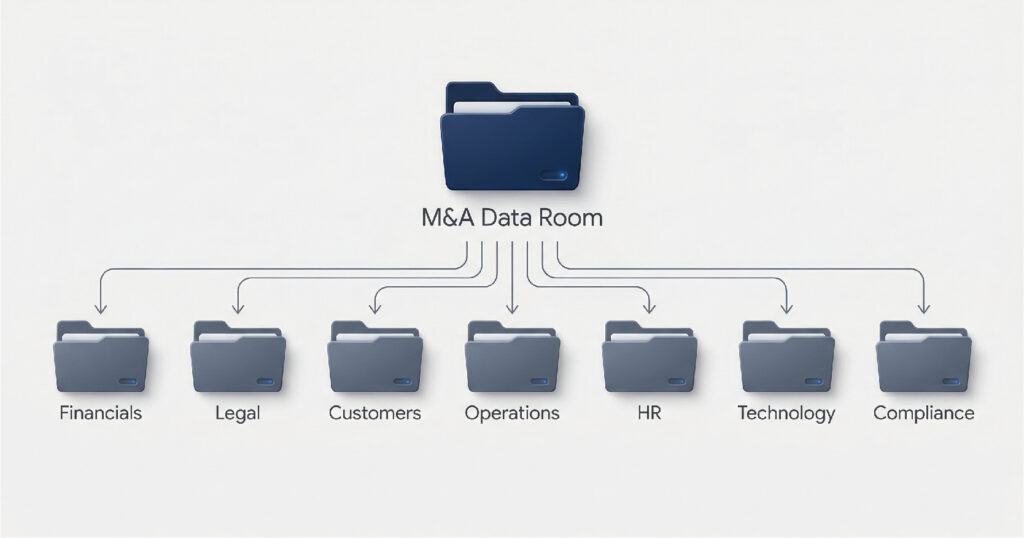
Sophisticated buyers follow a structured diligence checklist. They expect to review several categories of information that demonstrate how the business operates and generates cash flow.
The core sections typically include:
- Financial information
- Legal and corporate documentation
- Sales and customer data
- Operational processes
- Employee and HR information
- Technology and intellectual property
- Compliance and risk documentation
Providing these materials in an organized format allows buyers to evaluate the business quickly and accurately.
The Core Sections of a High-Quality M&A Data Room
1. Financial Documentation
Financial transparency is the foundation of any transaction.
Buyers expect a detailed view of the company’s historical performance and financial structure.
Typical documents include:
- Historical financial statements (3–5 years)
- Profit and loss statements
- Balance sheets
- Cash flow statements
- Detailed revenue breakdowns
- EBITDA adjustments and normalization schedules
- Budget and financial forecasts
Why This Matters
Financial inconsistencies are one of the most common causes of diligence delays and retrades.
Clean, clearly reconciled financial records allow buyers to validate earnings quickly and maintain confidence in valuation assumptions.
2. Corporate and Legal Documentation
Buyers must confirm that the company is legally structured and compliant with corporate governance requirements.
Common documents include:
- Articles of incorporation
- Shareholder agreements
- Board meeting minutes
- Cap table and ownership records
- Material contracts
- Lease agreements
- Litigation history
Why This Matters
Legal uncertainty creates transaction risk. Buyers want assurance that ownership is clear and contractual obligations are properly documented.
3. Customer and Revenue Data
Understanding revenue sources and customer relationships is critical to evaluating the durability of earnings.
Typical information includes:
- Customer concentration analysis
- Major client contracts
- Renewal schedules
- Pricing structures
- Sales pipeline and backlog
Why This Matters
Buyers need to understand how revenue is generated and whether customer relationships are stable.
Businesses with diversified, long-term customer relationships typically receive stronger valuations.
4. Operational Processes and Systems
Operational diligence focuses on how efficiently the business delivers products or services.
Key documentation may include:
- Process documentation
- Supply chain relationships
- Vendor contracts
- Production workflows
- Operational KPIs
Why This Matters
Operational clarity helps buyers assess scalability and efficiency. It also demonstrates that the business can continue operating smoothly after ownership transitions.
5. Employee and Management Information
People are often one of the most valuable assets in a business.
Buyers review information related to leadership and workforce stability.
Documents may include:
- Organizational charts
- Employment agreements
- Compensation structures
- Incentive plans
- Key employee retention risks
Why This Matters
A strong management team reduces transition risk and increases buyer confidence that the company will perform after the sale.
6. Technology and Intellectual Property
In many industries-particularly software, technology, and manufacturing-technology assets play a major role in valuation.
Relevant documentation may include:
- Intellectual property registrations
- Software documentation
- Technology architecture diagrams
- Security policies
- Data privacy compliance records
Why This Matters
Buyers must ensure that the company owns or properly licenses its technology assets and that no hidden legal risks exist.
How a Well-Structured Data Room Increases Valuation
Beyond simply speeding diligence, a strong data room can directly influence valuation outcomes.
Well-prepared sellers benefit in several ways.
1. Increased Buyer Confidence
Transparent documentation reduces perceived risk. Lower risk often leads to stronger offers and fewer protective deal structures.
2. Faster Diligence Timelines
When information is easy to locate and verify, buyers complete diligence more quickly. Faster timelines reduce the chance of performance fluctuations affecting valuation.
3. Reduced Risk of Retrades
Many price renegotiations occur when buyers uncover issues late in the diligence process. A thorough data room surfaces potential concerns early.
4. Competitive Buyer Dynamics
When multiple buyers can review information efficiently, competitive tension increases. Competition is one of the strongest drivers of premium valuations.
Common Data Room Mistakes Sellers Make
Despite its importance, many sellers underestimate the preparation required for a proper data room.
Common mistakes include:
- Uploading documents without logical organization
- Providing incomplete financial information
- Waiting until diligence begins to gather materials
- Allowing outdated or inconsistent documents to remain in the system
- Over-sharing irrelevant information that obscures key details
These issues slow the process and signal weak preparation.
Best Practices for Building an Effective Data Room
Business owners planning to sell should approach data room preparation strategically.
Key best practices include:
- Begin preparation 6–12 months before launching a sale process
- Organize documents into clear categories and subfolders
- Ensure financial statements reconcile cleanly
- Remove outdated or irrelevant materials
- Maintain version control for important documents
- Use a professional virtual data room platform with access tracking
Preparation allows sellers to present information clearly and maintain control over the narrative.
Conclusion: Preparation Drives Deal Certainty
A well-organized data room does more than store documents – it demonstrates professionalism, transparency, and operational discipline.
Buyers interpret preparation as a signal of lower risk. Lower perceived risk often translates into stronger offers and more favourable deal terms.
For business owners considering a sale, building a structured data room early is one of the most effective ways to accelerate diligence and protect valuation.
A confidential discussion with an experienced M&A advisor can help you identify the documents buyers expect, organize your data room strategically, and prepare your business for a successful transaction.
Frequently Asked Questions
What is a data room in M&A?
A data room is a secure digital repository where sellers provide financial, legal, and operational documents for buyers to review during due diligence.
When should a data room be created?
Ideally, business owners should begin preparing a data room several months before launching a sale process to ensure all documents are complete and organized.
Does a data room affect business valuation?
Yes. Well-organized data rooms increase buyer confidence, speed diligence, and reduce the likelihood of price renegotiations.
What documents are most important in a data room?
Financial statements, customer contracts, corporate documents, and operational information are among the most critical materials buyers review.