

Before discussing valuation multiples, buyers quietly screen potential acquisitions using a set of key performance indicators (KPIs) that reveal risk, scalability, and earnings quality. These early metrics help buyers decide whether a company is worth pursuing at all. While sellers often focus on revenue and EBITDA, experienced M&A buyers examine indicators such as revenue concentration, customer retention, cash flow conversion, margin stability, and management dependency. Business owners who understand these screening KPIs early can position their company more effectively and avoid valuation discounts during the M&A process.
Why Buyers Screen Deals Before Valuation
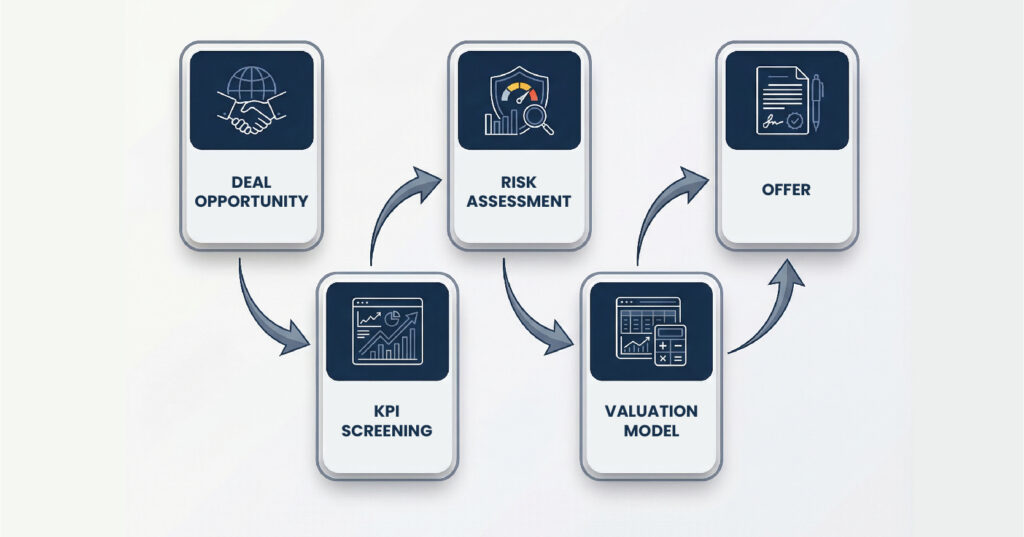
Many business owners assume valuation discussions begin with EBITDA multiples. In reality, most buyers-especially private equity firms and strategic acquirers-screen potential deals long before valuation models are built.
During the initial review stage, buyers ask a different set of questions:
- Is this business scalable?
- Are the earnings predictable?
- How concentrated is the revenue base?
- Can the company grow without the founder?
These questions are answered through KPIs that reveal the true quality of the business.
If these early indicators raise concerns, buyers may decline the opportunity before a formal valuation discussion even begins.
For sellers planning to exit your business in the next 12–36 months, improving these overlooked KPIs can significantly increase deal interest and competitive tension.
The KPIs Buyers Quietly Evaluate First
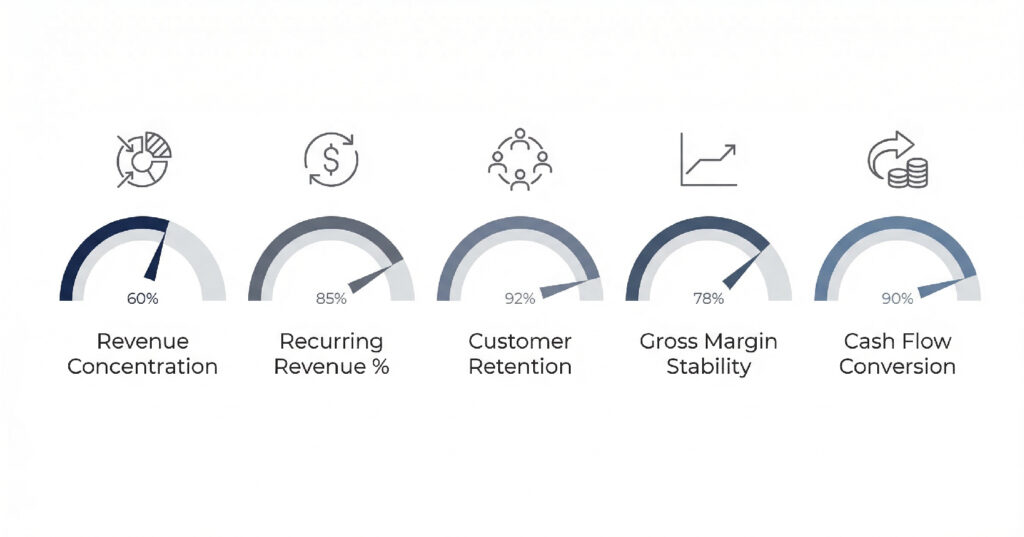
1. Revenue Concentration
One of the first metrics buyers examine is customer concentration.
If a large percentage of revenue comes from a small number of customers, the risk profile of the business increases significantly.
Buyers typically review:
- Percentage of revenue from the top 3 customers
- Percentage of revenue from the top 10 customers
- Contract duration and renewal patterns
Why It Matters
High concentration means the loss of one client could materially impact earnings.
While many mid-market companies operate with some concentration, buyers become cautious when:
- One customer represents more than 20–30% of revenue
- Contracts are short-term
- Relationships depend heavily on the founder
Reducing concentration or demonstrating long-term contracts can improve buyer confidence.
2. Recurring Revenue Percentage
Predictable revenue streams are highly attractive in M&A.
Buyers want to understand how much of your revenue is recurring versus transactional.
Common recurring revenue sources include:
- Subscription models
- Maintenance agreements
- Long-term service contracts
- Multi-year customer agreements
Why It Matters
Recurring revenue improves visibility into future cash flow and reduces uncertainty.
Businesses with higher recurring revenue percentages often receive stronger valuation multiples because future earnings are easier to predict.
3. Gross Margin Stability
Many sellers emphasize overall EBITDA but overlook the importance of gross margin consistency.
Buyers evaluate:
- Margin trends over multiple years
- Sensitivity to input costs
- Pricing power
Why It Matters
Volatile margins indicate operational instability.
Buyers want to know whether the business can maintain profitability even when input costs fluctuate or competitive pressure increases.
Stable margins signal operational discipline and pricing strength.
4. Customer Retention Rate
Retention is one of the clearest indicators of product-market fit. To understand how 7 buyer evaluation metrics that define your valuation — including retention — work together, buyers measure customer renewal rates, revenue retention, and customer lifetime value trends.
Why It Matters
Acquiring new customers is expensive. Businesses that retain customers effectively are easier to scale and require less ongoing marketing spend.
High retention rates also indicate strong customer satisfaction and switching costs.
5. Cash Flow Conversion
Not all EBITDA converts into cash.
Buyers therefore analyze cash flow conversion, which measures how efficiently earnings translate into operating cash flow.
They look at:
- EBITDA vs operating cash flow
- Working capital requirements
- Capital expenditure intensity
Why It Matters
Businesses that require heavy reinvestment or large working capital buffers may appear profitable but generate limited free cash flow.
Strong cash conversion improves buyer confidence and financing availability.
6. Revenue Growth Quality
Growth alone is not enough.
Buyers analyze how growth is achieved, not just how fast it occurs.
They examine:
- Organic vs acquisition-driven growth
- Dependence on a few salespeople
- Sustainability of marketing spend
- Pipeline visibility
Why It Matters
Growth that relies heavily on temporary factors-such as aggressive marketing campaigns or founder-driven sales-may not be sustainable.
High-quality growth comes from repeatable processes and diversified customer acquisition channels.
7. Management Team Depth
Founder dependency is a common issue in mid-market businesses. For small business M&A advisory clients especially, assess whether the company can operate effectively without the founder’s daily involvement.
They examine:
- Leadership team structure
- Decision-making independence
- Succession planning
Why It Matters
Businesses that rely heavily on one individual carry higher transition risk.
Strong management teams improve buyer confidence and often allow founders to exit more quickly after closing.
8. Customer Acquisition Efficiency
Buyers evaluate how efficiently the company generates new customers.
Key indicators include:
- Customer acquisition cost (CAC)
- Sales cycle length
- Conversion rates
- Sales productivity per employee
Why It Matters
If growth requires excessive marketing or sales investment, profitability may decline as the business scales.
Efficient customer acquisition suggests a scalable business model.
Why Sellers Often Overlook These KPIs
Many founders focus primarily on revenue growth and EBITDA because these metrics appear directly tied to valuation.
However, buyers evaluate business quality before valuation multiples even enter the conversation.
In practice, the screening process works like this:
- Buyers review key operational KPIs
- They assess risk and scalability
- Only then do they estimate valuation ranges
Businesses that perform well across these metrics often attract stronger buyer interest and more competitive bidding.
How to Improve Screening KPIs Before Selling
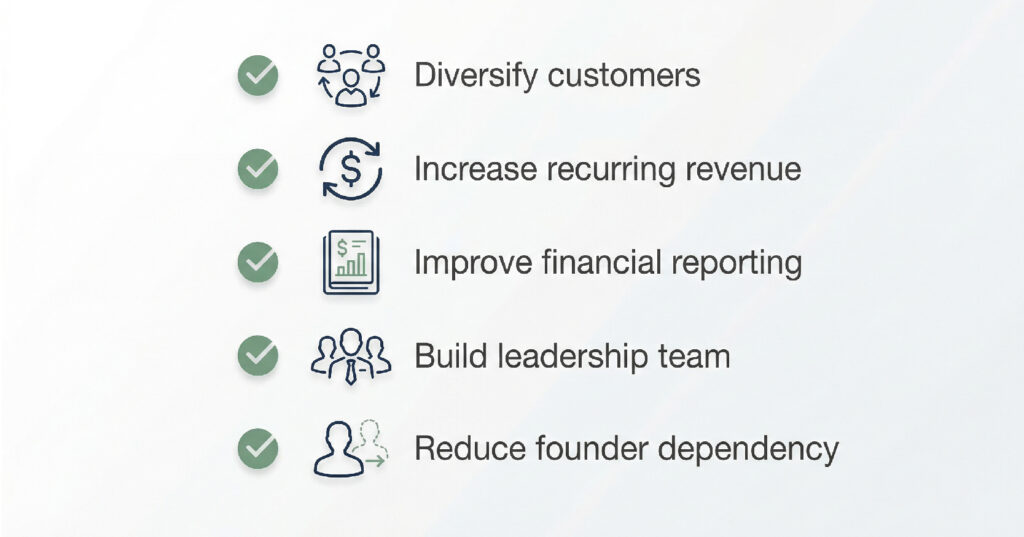
Business owners planning to sell within the next few years should focus on strengthening the indicators buyers evaluate first.
Practical steps include:
- Diversifying the customer base
- Expanding recurring revenue streams
- Stabilizing margins through pricing discipline
- Building a stronger leadership team
- Improving financial reporting clarity
- Reducing founder dependency
Improving these fundamentals increases both deal interest and valuation outcomes.
Conclusion: Valuation Begins Before the Valuation Model
The most important lesson for sellers is that valuation discussions rarely begin with valuation. Buyers first evaluate whether the business meets their internal screening criteria. Only after those KPIs look strong do they move forward with detailed analysis and pricing discussions.
Business owners who focus on improving these underlying metrics well before launching a sale process position themselves for stronger buyer interest, smoother diligence, and better exit outcomes.
If you are considering selling your business within the next few years, a confidential M&A consultation with an experienced M&A advisor can help identify which KPIs buyers will evaluate first-and how to strengthen them before entering the market.
Frequently Asked Questions
What KPIs do buyers look at before valuing a business?
Buyers typically review revenue concentration, recurring revenue percentage, retention rates, margin stability, cash flow conversion, and management team depth.
Why do buyers screen deals before discussing valuation?
Screening helps buyers assess risk and scalability. If early indicators suggest instability, buyers may decline the opportunity before building a valuation model.
Which KPI most affects business valuation?
Recurring revenue, customer retention, and revenue concentration are among the most influential factors because they affect earnings predictability.
When should owners start improving these KPIs?
Ideally, 12–36 months before launching a sale process, allowing enough time to demonstrate sustained improvements.