

When business owners begin thinking about an exit, one of the most important—and often misunderstood—decisions is how much of the business to sell. For some, a clean break through a full sale feels right. For others, selling partial equity offers liquidity while keeping a seat at the table.
Understanding the partial equity sale pros and cons compared to a full exit is critical to making the right decision—not just financially, but personally and strategically. The choice you make will shape your wealth outcome, your future involvement, and even the legacy of the business you’ve built.
This guide explains both paths clearly, helping founders evaluate which exit strategy aligns best with their goals.
Understanding the Two Core Exit Paths
At a high level, most founders face two primary business exit options for founders: a partial sale or a full equity sale. While both involve selling ownership to an external buyer—often private equity or a strategic acquirer—the outcomes are very different.
A partial sale means selling a portion of your equity (commonly a majority or minority stake) while retaining ownership and continuing to operate or help grow the business. A full equity sale, on the other hand, involves selling 100% of the company and exiting entirely, either immediately or after a short transition period.
Neither option is inherently better. The right choice depends on timing, risk tolerance, growth expectations, and personal readiness to exit.
Partial Equity Sale: What It Really Means for Founders
A partial sale is often structured as a partnership with a private equity firm or growth investor. Founders typically take liquidity off the table while rolling over some equity into the next phase of growth.
Partial Equity Sale Pros and Cons
From a seller’s perspective, the benefits are compelling—but they come with trade-offs.
On the positive side, a partial sale allows founders to:
- Achieve meaningful liquidity without fully exiting
- Reduce personal financial risk
- Retain upside through rolled equity
- Access capital, expertise, and operational support
- Participate in a second, often larger exit
This approach is especially attractive to founders who believe the business still has strong growth ahead but want to de-risk personally.
However, there are important drawbacks to consider:
- You no longer have full control
- Major decisions require investor approval
- Performance expectations increase significantly
- Your role becomes more structured and accountable
- Exit timing may be influenced by the investor
A partial equity sale works best when the founder is excited about scaling further and comfortable sharing control.
Full Equity Sale: A Clean Exit Strategy
A full equity sale is the most straightforward exit. Ownership transfers completely to the buyer, and the founder exits either immediately or after a short earn-out or transition.
For many owners, this represents the emotional and financial culmination of years of effort.
The advantages of a full sale are clear:
- Maximum liquidity at close
- No future operational or financial risk
- Clean break and personal freedom
- Simpler governance and decision-making
- Clear valuation and deal structure
That said, a full sale also means:
- No participation in future upside
- Less flexibility if the business grows rapidly post-sale
- Emotional adjustment after stepping away
A full exit is often ideal for founders nearing retirement, experiencing burnout, or ready to move on to new ventures.
How Buyers View Partial vs Full Sales
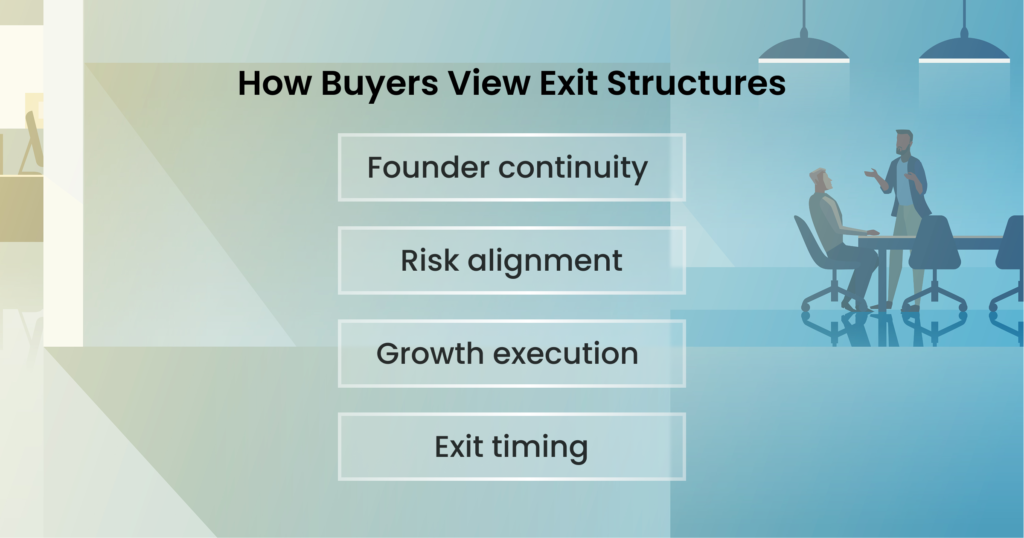
From a buyer’s perspective, both structures serve different objectives.
Private equity firms often prefer partial sales because:
- Founder continuity reduces risk
- Incentives stay aligned
- Growth execution improves
- Second exits generate strong returns
Strategic buyers, however, typically favor full equity sales to:
- Integrate operations quickly
- Gain full control
- Capture synergies without constraint
Understanding buyer intent is a crucial part of business exit planning. The same business may attract very different offers depending on whether a partial or full sale is on the table.
Which Exit Strategy Is Right for You?
Choosing between these equity sale strategies requires more than comparing valuations. Founders should consider:
- Are you financially secure without selling 100%?
- Do you want to keep operating the business?
- Are you comfortable with investor oversight?
- Do you believe the biggest growth is still ahead?
- Is your goal wealth maximization or lifestyle freedom?
If you want to stay involved, grow faster, and potentially exit again at a higher valuation, a partial sale may be the right fit. If you want certainty, simplicity, and a definitive exit, a full sale may align better.
The Role of Exit Strategy Planning
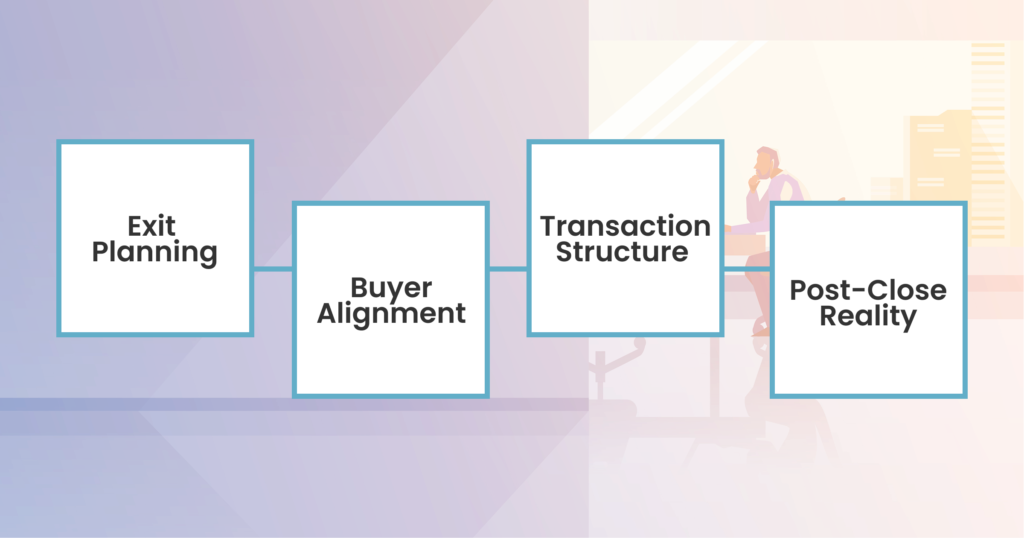
The most successful exits are planned—not rushed. Effective exit strategy and business exit planning help founders:
- Understand valuation trade-offs
- Prepare for buyer expectations
- Structure deals to match personal goals
- Avoid regret after the transaction
Importantly, you don’t have to decide today. Many founders prepare for both paths, creating optionality when the right buyer appears.
Final Takeaway for Business Owners
There is no universal answer to whether a partial or full sale is better. The right exit strategy depends on your financial needs, risk tolerance, growth outlook, and personal readiness to step back.
Understanding the partial equity sale pros and cons—and how they compare to a full exit—puts you in control of the process rather than reacting to buyer offers.
Considering an Exit? Get Clarity Before You Decide
If you’re evaluating a partial sale or a full equity sale, the smartest first step is understanding your options in the current market. A professional exit review can help you compare outcomes, valuations, and future scenarios—before you commit to a path.
A well-planned exit doesn’t just maximize value.
It ensures the outcome aligns with your life, not just your balance sheet.